
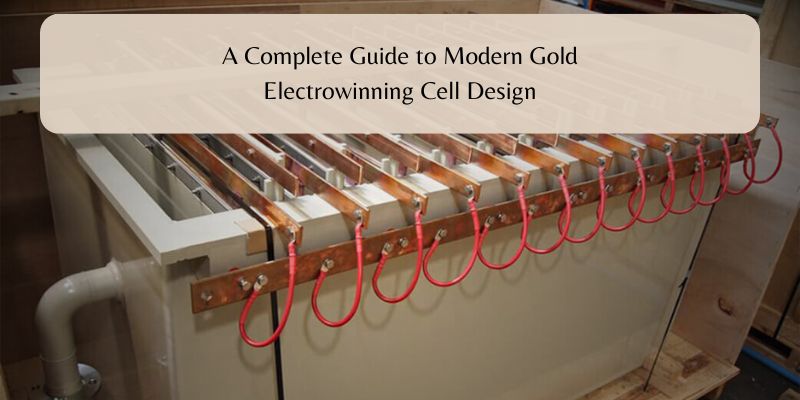
Modern precious metal recovery relies on carefully engineered processes that balance efficiency, safety, and consistency. Among these processes, electrowinning remains a critical stage for extracting dissolved metal from solution streams following leaching and elution. Advances in engineering, materials, and automation have transformed how recovery cells are designed and operated. Understanding the principles behind Gold Electrowinning Cell Design provides valuable insight into how today’s recovery plants achieve higher yields with greater operational control.
Understanding the Role of Electrowinning in Recovery Circuits
Electrowinning is the stage where dissolved metal ions are deposited onto cathodes using controlled electrical current. It represents the transition from chemical processing to physical recovery. The effectiveness of this stage directly influences overall plant output, energy efficiency, and downstream refining quality.
Modern systems are designed to operate reliably within integrated recovery circuits. They must accommodate variations in solution chemistry, flow rate, and metal concentration while maintaining consistent deposition performance.
Core Principles Behind Cell Design
At its foundation, an electrowinning cell is a balance of electrical, chemical, and hydraulic considerations. Current density, electrode spacing, and electrolyte movement all influence deposition quality.
Well-designed cells promote uniform current distribution across cathode surfaces. This uniformity reduces uneven plating, minimises short-circuiting risks, and improves stripping efficiency during metal removal.
Materials and Structural Configuration
Material selection plays a decisive role in performance and longevity. Cell tanks are commonly fabricated from corrosion-resistant polymers or lined steel structures to withstand aggressive chemical environments.
Cathodes and anodes are selected for conductivity, durability, and ease of handling. Stainless steel cathodes are widely used due to their smooth surfaces and reliable stripping characteristics, while inert anodes help maintain solution stability.
Electrical Efficiency and Power Control
Power supply configuration determines how effectively energy is converted into metal recovery. Modern rectifiers allow precise control over voltage and current, enabling operators to respond to changes in solution composition.
Efficient electrical control reduces energy loss, limits heat generation, and supports stable deposition rates. This precision is essential in large-scale operations where energy consumption significantly affects operating costs.
Flow Dynamics and Solution Management
Solution movement within the cell influences ion transport and deposition consistency. Poor circulation can lead to concentration gradients, reducing recovery efficiency.
Modern designs incorporate optimised inlet and outlet positioning to maintain steady flow across electrode surfaces. Some systems also integrate internal baffles to improve distribution and reduce stagnation zones.
Safety and Operational Accessibility
Modern electrowinning systems prioritise operator safety and ease of maintenance. Enclosed designs reduce exposure to fumes and splashing, while modular components simplify inspection and cleaning.
Ergonomic considerations allow safer cathode handling and faster turnaround during harvesting cycles, contributing to smoother plant operation.
Integration With Upstream and Downstream Systems
Electrowinning cells do not operate in isolation. Their performance is closely linked with upstream elution circuits and downstream refining processes.
Coordination with specialists such as Gold Refinery Consultants India helps ensure that cell parameters align with overall plant objectives, from solution chemistry management to final metal purity.
Automation and Monitoring Advancements
Automation has reshaped modern electrowinning operations. Sensors monitor voltage, current efficiency, temperature, and solution composition in real time. Data-driven control systems allow early detection of inefficiencies or abnormal conditions.
These advancements support predictive maintenance and process optimisation, reducing downtime and improving consistency across operating cycles.
Scaling and Customisation Considerations
No two recovery operations are identical. Modern cell design allows scalability, whether for small pilot plants or large industrial facilities. Modular configurations enable capacity expansion without complete system redesign.
Customisation ensures compatibility with specific recovery strategies, including variations linked to Gold Elution System Design India, where solution characteristics influence cell sizing and layout.
Environmental and Sustainability Factors
Energy efficiency and waste minimisation are increasingly important. Modern electrowinning cells are designed to reduce energy consumption per unit recovered and limit secondary waste generation.
Improved efficiency not only lowers costs but also supports environmental responsibility by reducing overall process footprint.
Key Features of Modern Electrowinning Cell Design
- Uniform current distribution for consistent deposition
- Corrosion-resistant construction materials
- Precise electrical control and energy efficiency
- Optimised solution flow and circulation
- Integration with automated monitoring systems
Conclusion: Engineering Recovery for Long-Term Performance
Modern electrowinning cell design reflects the convergence of electrical engineering, chemical control, and practical plant operation. Well-designed systems enhance recovery efficiency, improve operational safety, and support sustainable production goals. Ongoing evaluation through Gold Recovery Improvement Audits helps identify opportunities for optimisation as operating conditions evolve. Within this specialised engineering landscape, Tanka Engineers illustrates how thoughtful system design and process understanding contribute to reliable, high-performance recovery solutions in contemporary precious metal processing.