The mining industry is becoming increasingly complex as companies aim to maximise recovery, reduce costs, and meet strict environmental standards. Success in this sector depends on combining strong geological understanding with advanced metallurgical processes and sustainable operational strategies. Engineering expertise plays a vital role in ensuring that each stage of a mining project delivers optimal performance and long term value.
From identifying mineral deposits to designing efficient processing systems, integrated consultancy services help mining companies improve decision making and reduce operational risks. By adopting modern engineering practices, organisations can enhance productivity while maintaining environmental responsibility.
Building Strong Foundations
Every mining project begins with identifying and understanding mineral deposits. Exploration & Resource Development provides the groundwork for evaluating the size, quality, and economic potential of these resources.
This stage involves a combination of geological surveys, drilling programs, and analytical studies that help define ore bodies. Once mineralisation is confirmed, resource development activities focus on modelling the deposit and planning extraction strategies.
Key steps involved in this process include:
- Geological mapping and structural analysis
- Drilling and sampling campaigns
- Resource estimation and classification
- Preliminary mine planning
Accurate geological data helps reduce uncertainty and supports better planning. With a clear understanding of resource distribution, mining companies can optimise extraction methods and improve long term project outcomes.
Efficient Gold Recovery
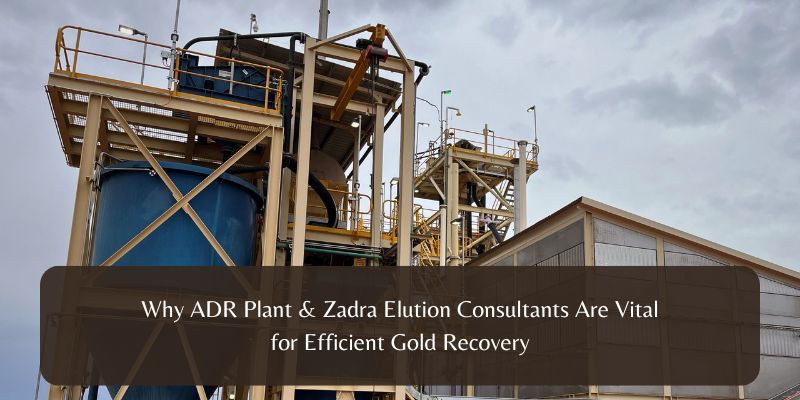
Gold processing operations require specialised systems to recover metal efficiently from leached solutions. ADR Plant & Zadra Elution Consultants focus on designing adsorption, desorption, and recovery systems that enhance gold extraction performance.
ADR plants use activated carbon to adsorb gold from solution, followed by desorption processes to recover the metal. The Zadra elution method is widely used for stripping gold from loaded carbon using heated solutions. Proper system design ensures high recovery rates and stable plant operation.
Important design considerations typically include:
- Optimised adsorption and desorption cycles
- Efficient carbon handling systems
- Controlled temperature and flow parameters
- Integration with downstream recovery processes
When these systems are engineered correctly, they improve recovery efficiency, reduce processing time, and support consistent production.
Metallurgical Expertise
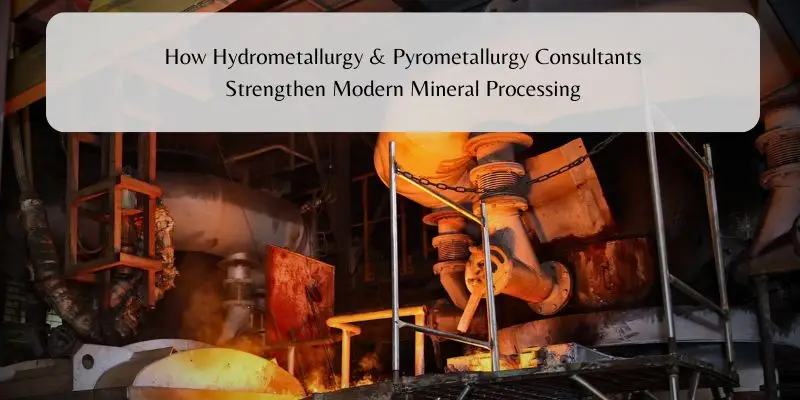
Mineral extraction requires the application of suitable metallurgical techniques based on ore characteristics. Hydrometallurgy & Pyrometallurgy Consultants provide expertise in selecting and optimising these processes for maximum efficiency.
Hydrometallurgy involves extracting metals using chemical solutions, while pyrometallurgy uses high temperature processes such as smelting. The choice between these methods depends on factors such as ore composition, energy requirements, and recovery targets.
The following table highlights the differences between these approaches:
| Process Type | Method Used | Common Applications |
| Hydrometallurgy | Leaching and solution based extraction | Gold, copper, uranium |
| Pyrometallurgy | Smelting and thermal treatment | Iron, nickel, lead |
| Hybrid Systems | Combination of both methods | Complex ores |
These metallurgical processes help maximise recovery rates while maintaining cost efficiency. Proper design and optimisation also reduce waste generation and improve overall plant performance.
Driving Efficiency
Modern mining operations must focus on reducing environmental impact while maintaining high productivity. Sustainability & Process Optimisation strategies help achieve this balance by improving efficiency across all stages of the operation.
Process optimisation involves analysing plant performance and identifying opportunities for improvement. Engineers use data analysis, simulation tools, and real time monitoring systems to enhance recovery rates and reduce resource consumption.
Key optimisation strategies often include:
- Reducing energy consumption through efficient equipment
- Implementing water recycling systems
- Improving recovery rates through advanced processing techniques
- Minimising waste generation and emissions
These initiatives not only lower operating costs but also strengthen environmental compliance. By integrating sustainability into operational planning, mining companies can build responsible and future ready systems.
Frequently Asked Questions
- What is the role of exploration in mining projects?
It helps identify mineral deposits and evaluate their economic potential before development begins. - How do ADR plants improve gold recovery?
They use activated carbon and desorption processes to efficiently recover gold from solutions. - What is the difference between hydrometallurgy and pyrometallurgy?
One uses chemical solutions for extraction, while the other relies on high temperature processes. - Why is process optimisation important in mining?
It improves efficiency, reduces costs, and enhances resource utilisation. - How does sustainability impact mining operations?
It ensures environmental protection, regulatory compliance, and long term operational viability.
Conclusion
Mining projects require a combination of technical expertise, efficient process design, and responsible environmental practices. Tanka Engineers provides comprehensive engineering and consultancy solutions that help mining companies improve performance and achieve sustainable growth. Their expertise supports efficient resource utilisation and reliable project execution across the mining value chain.