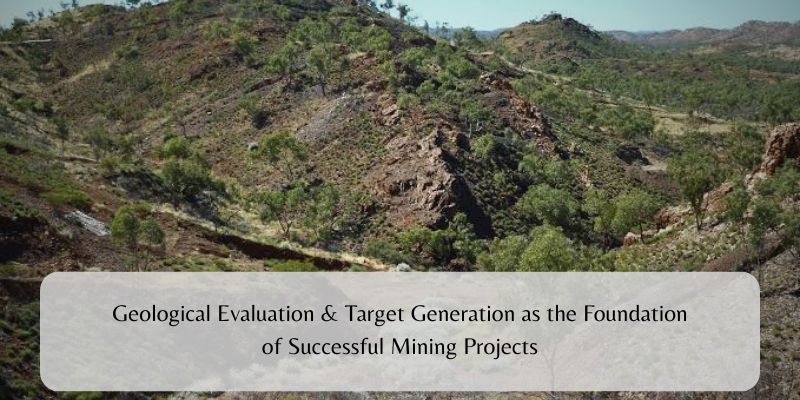
Every successful mining project begins with accurate geological knowledge. Geological Evaluation & Target Generation provides the information needed to identify promising mineral zones, reduce exploration uncertainty, and support informed investment decisions. By combining field observations, laboratory analysis, and modern interpretation techniques, specialists can identify areas with the highest development potential. This structured approach allows mining companies to allocate resources efficiently while minimizing unnecessary exploration costs and preparing projects for long term success.
Why Geological Evaluation & Target Generation Improves Decision Making
Reliable geological data forms the backbone of every mining operation. Before extraction begins, experts analyze rock formations, mineral distribution, and structural features to determine whether a deposit is commercially viable. Accurate evaluation also reduces project risks by improving confidence in exploration results.
Important activities during this stage include:
- Geological mapping
- Surface and subsurface sampling
- Mineral identification
- Structural interpretation
- Target prioritization
These activities provide valuable insights that guide exploration teams toward areas with greater mineral potential while supporting efficient planning throughout the project lifecycle.
The Role of Engineering Services in Mine Development
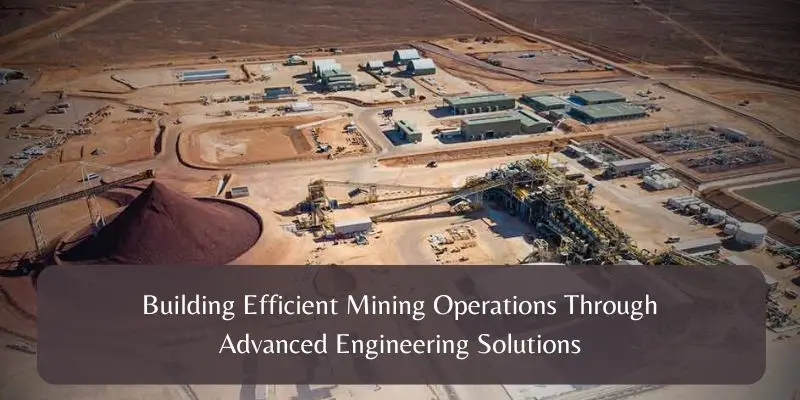
Once promising deposits are identified, effective engineering becomes essential for converting geological findings into practical production plans. Mineral Processing Plant EPCM Services help integrate engineering, procurement, construction, and project management into a coordinated development strategy.
Engineering teams typically focus on:
- Process plant planning
- Equipment selection
- Infrastructure coordination
- Construction scheduling
- Operational readiness
This integrated approach helps align technical requirements with project timelines, ensuring smoother implementation and better resource utilization during mine development.
Critical Stages in a Mining Project
Every mining operation progresses through several interconnected phases. Understanding each stage helps project teams maintain efficiency while reducing operational uncertainty.
| Project Stage | Primary Objective |
| Initial exploration | Identify potential mineral deposits |
| Geological assessment | Evaluate deposit characteristics |
| Engineering design | Prepare technical development plans |
| Construction and commissioning | Establish operational facilities |
| Production monitoring | Maintain efficient long term performance |
Following a structured project sequence allows organizations to improve coordination between technical teams and optimize project execution.
Building Confidence Through Accurate Resource Analysis
Reliable planning depends on understanding the size, quality, and distribution of mineral deposits. Resource Estimation & 3D Geological Modelling provides engineers and geologists with detailed visual representations that support technical decision making and long term production planning.
The benefits of advanced resource analysis include:
- Improved reserve calculations
- Better mine planning
- Enhanced drilling strategies
- Reduced geological uncertainty
- More effective production forecasting
These tools enable mining professionals to evaluate complex deposits with greater accuracy while supporting efficient operational planning throughout the mine’s lifespan.
Future Trends in Geological and Mining Engineering
Technological advancements continue to improve exploration and mine planning capabilities. Digital tools allow professionals to collect, analyze, and interpret geological information more efficiently than traditional methods.
Emerging industry trends include:
- Geographic information systems for mapping
- Drone based geological surveys
- Artificial intelligence for exploration analysis
- Cloud based geological data management
- Real time monitoring of mining operations
The adoption of these technologies supports faster decision making and improves collaboration across exploration, engineering, and production teams.
FAQs
1. Why is geological evaluation important before mining begins?
It helps identify mineral potential, reduces exploration risks, and supports informed project planning.
2. What is the purpose of target generation in mineral exploration?
Target generation identifies the most promising locations for detailed exploration and future drilling activities.
3. How do EPCM services benefit mining projects?
They coordinate engineering, procurement, construction, and project management to improve project efficiency and implementation.
4. Why is three dimensional geological modelling valuable?
It provides a detailed understanding of mineral deposits, helping improve mine planning and reserve estimation.
5. How does technology improve modern mining projects?
Digital mapping, data analysis, automation, and advanced modelling tools increase accuracy, improve planning, and support operational efficiency.
Conclusion
Effective mining projects rely on accurate geological information, structured engineering, and detailed resource planning to achieve sustainable long term performance. Integrating exploration findings with engineering expertise allows organizations to reduce uncertainty while improving project execution and operational efficiency. For projects involving CIL and CIP Plant Design India, careful planning and technical evaluation remain essential for successful implementation. Tankaengineers contributes engineering knowledge that supports responsible mineral development and efficient processing solutions.