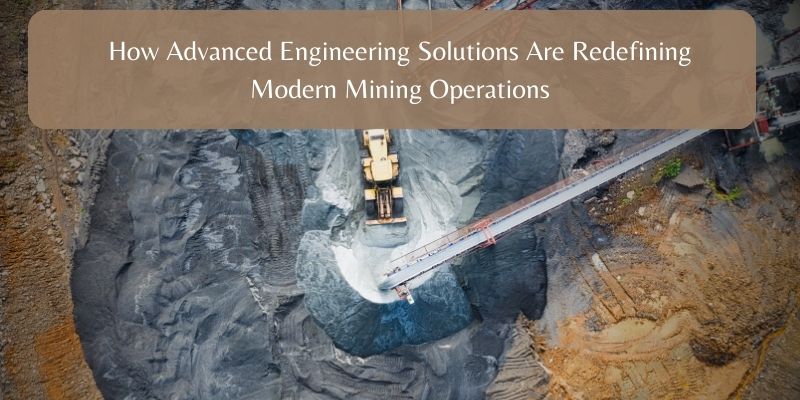
The global extraction industry is undergoing a significant transformation. Rising demand for minerals, stricter environmental regulations, and increasing operational costs have compelled companies to rethink traditional practices. Today, success depends not only on resource availability but also on efficiency, safety, and sustainability. In this evolving landscape, Innovative Engineering Solutions for Mining are reshaping how extraction sites operate, optimise resources, and minimise environmental impact.
Advanced engineering integrates automation, digital analytics, precision equipment, and environmentally conscious design. These systems enhance productivity while addressing ecological responsibilities. The result is a more intelligent, data-driven, and sustainable operational framework.
Digital Transformation in Extraction Operations
Digital technologies are at the forefront of modern site management. Automation and real-time data monitoring allow operators to make informed decisions quickly and accurately.
Technological advancements include:
- Remote-controlled drilling systems
- Predictive maintenance analytics
- Autonomous haulage vehicles
- Real-time performance dashboards
These innovations reduce downtime, improve safety, and increase overall efficiency.
Enhancing Operational Efficiency
Efficiency is no longer limited to production output. It encompasses energy use, equipment performance, and resource utilisation. Advanced engineering frameworks streamline workflows and eliminate redundancies.
A major focus area is process optimisation & sustainable mining, where precision engineering reduces material waste and enhances recovery rates.
Efficiency-driven strategies involve:
- Optimised material flow systems
- Energy-efficient crushing and grinding units
- Advanced separation technologies
- Integrated water recycling systems
Such measures contribute to both profitability and environmental responsibility.
Safety Improvements Through Engineering
Workplace safety remains a critical concern in extraction industries. Modern engineering solutions prioritise hazard reduction and risk mitigation through technology-driven design.
Safety-focused advancements include:
- Automated monitoring of hazardous zones
- Ventilation optimisation systems
- Structural reinforcement analysis
- Wearable safety sensors for workers
These measures significantly reduce accident rates and enhance worker protection.
Environmental Responsibility and Resource Management
Environmental stewardship has become central to operational planning. Companies are increasingly adopting strategies that limit ecological disruption and support responsible land use.
Sustainable engineering initiatives may include:
- Tailings management systems
- Dust suppression technologies
- Water conservation practices
- Emission control mechanisms
These practices align with global environmental standards and community expectations.
Integration of Artificial Intelligence and Data Analytics
Artificial intelligence and machine learning are revolutionising operational planning. Data-driven insights enable predictive analysis of equipment performance and ore quality.
Within emerging frameworks such as Smart Mining Solutions India, digital platforms facilitate automated decision-making and optimise resource allocation.
Data-centric benefits include:
- Enhanced ore grade prediction
- Real-time operational adjustments
- Improved cost forecasting
- Reduced equipment downtime
Digital integration strengthens productivity and reliability.
Sustainable Infrastructure Development
Modern extraction operations require infrastructure designed for longevity and minimal environmental impact. Engineering innovations focus on modular systems and eco-conscious construction.
Infrastructure advancements include:
- Energy-efficient processing plants
- Renewable energy integration
- Modular conveyor systems
- Low-impact site rehabilitation design
These solutions ensure long-term sustainability.
Resource Recovery and Waste Reduction
Maximising resource recovery reduces environmental burden while improving economic viability. Advanced separation and beneficiation techniques enhance material yield.
Waste-reduction strategies involve:
- Improved flotation technologies
- Advanced filtration systems
- Efficient tailings reuse
- Circular economy practices
Higher recovery rates translate into lower environmental footprint.
Automation and Workforce Efficiency
Automation enhances productivity while allowing skilled personnel to focus on strategic oversight. Remote operation systems reduce exposure to hazardous conditions.
Operational benefits include:
- Reduced manual intervention
- Enhanced accuracy in drilling
- Streamlined transportation logistics
- Consistent performance monitoring
This balance between automation and human expertise strengthens operational resilience.
Community and Regulatory Alignment
Modern extraction practices must align with regulatory requirements and community expectations. Transparent reporting and responsible engineering foster trust and long-term cooperation.
Compliance-oriented practices include:
- Environmental impact assessments
- Transparent data reporting
- Community engagement programmes
- Responsible rehabilitation planning
Engineering plays a vital role in maintaining social licence to operate.
Conclusion
Advanced engineering is redefining extraction operations by enhancing efficiency, safety, and environmental stewardship. Through digital transformation, automation, predictive analytics, and sustainable infrastructure design, companies are adapting to evolving global expectations. Strategic adoption of technology supports long-term productivity while reducing ecological impact.
For organisations seeking expertise in Sustainable Mining & Process Optimisation, Tanka Engineers delivers forward-thinking engineering approaches designed to strengthen operational performance and environmental responsibility. As the industry advances, integrated engineering innovation will remain central to responsible and efficient resource development.