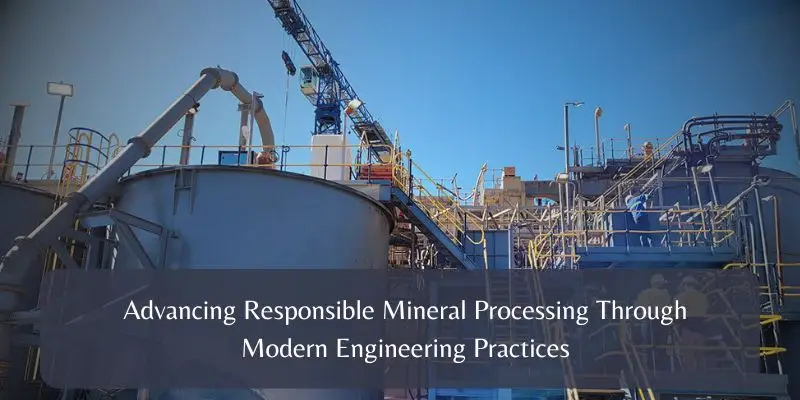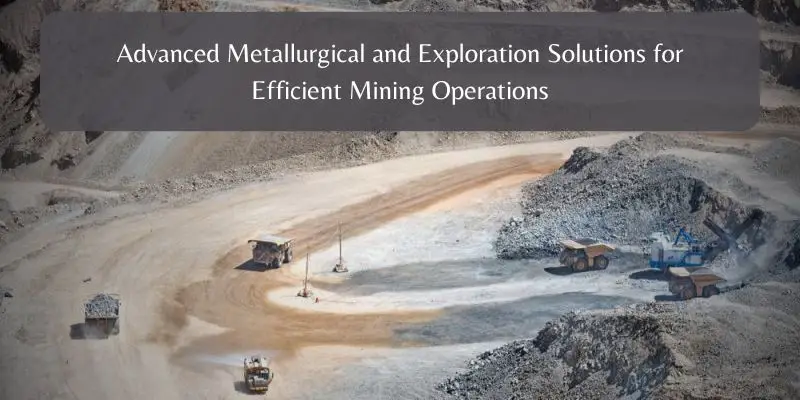
Mining projects involve complex interactions between geology, engineering, infrastructure, environmental management, and operational planning. EPCM Mining Consultants India can support project development by coordinating these disciplines across different stages of the mining lifecycle. Effective consulting begins with understanding the resource, assessing technical requirements, and establishing practical systems for processing and production. As projects progress, engineering decisions must also consider efficiency, safety, environmental performance, and long-term operational requirements. A coordinated approach can help identify potential constraints earlier and create a structured pathway from resource assessment to project implementation.
Exploration & Resource Development in Modern Mining
Exploration provides the geological foundation for decisions concerning mine development. It involves collecting and interpreting information about mineralisation, geological structures, resource distribution, and deposit characteristics. Reliable exploration data helps determine whether a deposit can support further technical and economic assessment.
Resource development then converts geological understanding into practical project information. Depending on the deposit, this may involve drilling programs, sampling, geological modelling, resource estimation, and preliminary mine planning.
Key activities may include:
- Geological mapping and data interpretation
- Exploration drilling and sampling
- Resource modelling and estimation
- Preliminary mine design
- Infrastructure assessment
- Technical and economic evaluation
- Planning for future development stages
Each activity contributes information that can reduce uncertainty. Maintaining accurate and traceable data throughout this stage is important because later engineering and financial decisions often depend on the quality of the original geological information.
Integrating Engineering Across Project Stages
Mining projects require several engineering disciplines to work together. Process engineering may determine how ore is treated, while mechanical and electrical engineering address equipment and power requirements. Civil and structural engineering can support buildings, foundations, roads, drainage, and other infrastructure.
A coordinated engineering framework helps ensure that decisions made in one area do not create avoidable problems elsewhere. For example, processing equipment specifications may influence building dimensions, electrical demand, water requirements, and material-handling arrangements.
| Project Area | Primary Focus | Key Consideration |
| Geology | Resource understanding | Data quality and confidence |
| Process engineering | Mineral treatment | Recovery and throughput |
| Infrastructure | Site development | Access and utilities |
| Environmental planning | Impact management | Compliance and resource use |
| Project management | Implementation | Cost, schedule, and coordination |
Clear communication between disciplines is particularly important when projects move from feasibility studies into detailed engineering and construction.
From Feasibility Studies to Project Implementation
Feasibility assessment provides a structured opportunity to examine whether a proposed mining development can be implemented effectively. Technical studies can evaluate processing methods, infrastructure requirements, production capacity, water systems, energy demand, and other operational considerations.
Project implementation then requires these findings to be translated into coordinated engineering packages and execution plans. Decisions should account for construction conditions, equipment availability, site logistics, commissioning requirements, and future maintenance.
A systematic implementation process may involve:
- Establishing project objectives and technical criteria.
- Reviewing available geological and operational information.
- Developing engineering concepts and alternatives.
- Assessing technical and environmental constraints.
- Preparing detailed designs and project schedules.
- Coordinating procurement and construction requirements.
- Planning commissioning and operational handover.
This approach provides defined checkpoints where assumptions can be reviewed before significant resources are committed.
Sustainability & Process Optimisation for Mining Operations
Sustainable mining increasingly depends on improving resource efficiency while maintaining production objectives. Sustainability & Process Optimisation can involve examining water consumption, energy use, material recovery, waste generation, and process stability as interconnected areas.
Process optimisation may begin with identifying where losses or inefficiencies occur. Operational data can then be assessed to understand variations in throughput, recovery, energy consumption, or reagent use. Improvements may include equipment adjustments, process-control changes, improved material handling, or better monitoring practices.
Important areas for evaluation include:
- Water recycling and reuse
- Energy consumption per unit of production
- Recovery and process efficiency
- Tailings and waste management
- Equipment utilisation
- Process monitoring and control
- Reduction of unnecessary material movement
Sustainability should be considered throughout the project rather than treated solely as a later operational requirement. Early decisions regarding plant configuration, water systems, energy infrastructure, and waste handling can influence environmental performance over many years.
FAQs About Mining Consulting and Project Development
- What does mining consulting cover?
Mining consulting can cover exploration, resource assessment, engineering, feasibility studies, project implementation, process development, and operational improvement. - Why is exploration important before mine development?
Exploration establishes an understanding of the deposit and provides information needed for resource estimation, mine planning, and technical evaluation. - How does EPCM support mining projects?
EPCM approaches coordinate engineering, procurement, and construction management activities, helping connect technical design with project execution. - Why is process optimisation important?
It can help identify opportunities to improve resource utilisation, process stability, recovery, energy efficiency, and operating performance. - How does sustainability influence mining projects?
It influences decisions involving water, energy, waste, emissions, resource efficiency, environmental management, and long-term site performance.
Conclusion
Integrated planning allows mining projects to address geological, engineering, operational, and environmental considerations within a coordinated framework. Strong project development depends on reliable resource information, appropriate engineering decisions, structured implementation, and continuous attention to efficiency. Environmental considerations should also be incorporated early so that sustainability becomes part of project planning rather than an isolated activity. For specialised requirements involving treatment processes and environmental controls, Cyanide Detoxification Plant Consultants can contribute technical considerations to projects where cyanide management and detoxification form part of the processing strategy. Tankaengineers can be considered within this broader project development context.